

Freedom of the press is facing an unprecedented crisis, although its current form differs
greatly from what we once knew. Today, silencing rarely manifests through the physical
closure of a news outlet or the imprisonment of a journalist. Censorship has become more
subtle, more complex—and therefore, more dangerous. It infiltrates algorithms, the attention
economy, and the structures of power that determine which information deserves to be seen
and which is lost in the digital noise.
This transformation stems from three interconnected dynamics: the persistence of violence
and judicial harassment as tools of intimidation; the economic precariousness that drives
professionals toward self-censorship; and the emergence of an automated system of
informational control, exercised by platforms whose opaque functioning is redefining what
we understand as freedom of expression.
The challenge for contemporary journalism, therefore, is to develop an algorithmic
awareness: the ability to understand and question the technological mechanisms that shape
public visibility. Only through the democratic regulation of digital power and a professional
ethic adapted to this new context can journalism continue to serve as a space for truth and
resistance against invisible forms of control.
Study

The Metamorphosis of Censorship in the Digital Age: Algorithmic Challenges and the Future of Journalism
November 26, 2025
January 16, 2026


Colabora en los próximos números de Comunicación y Hombre
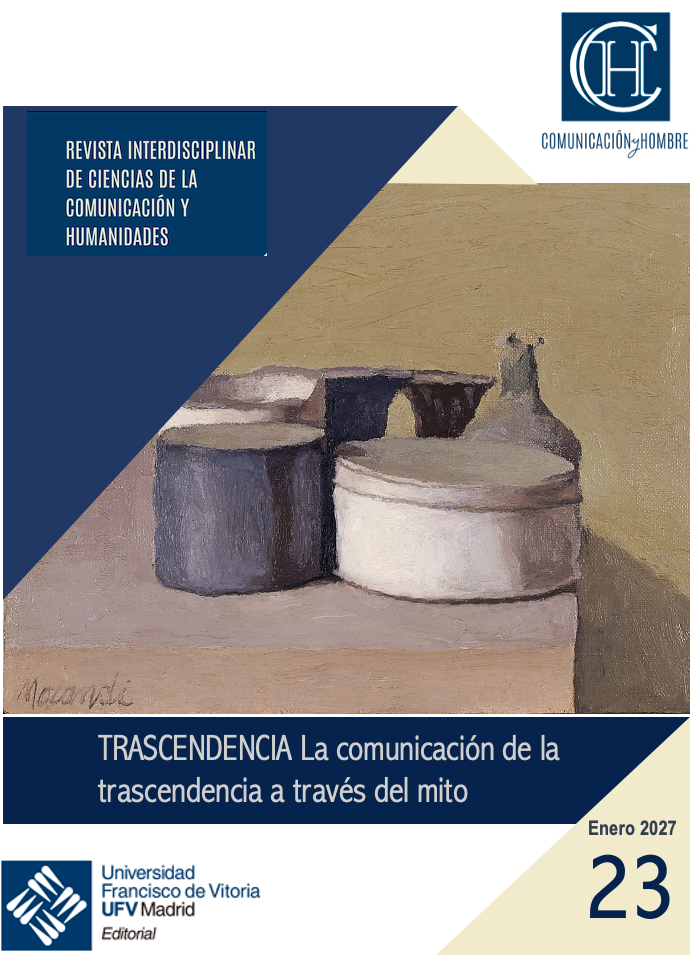
La comunicacion de la trascendencia a través del mito
CALL FOR PAPERS
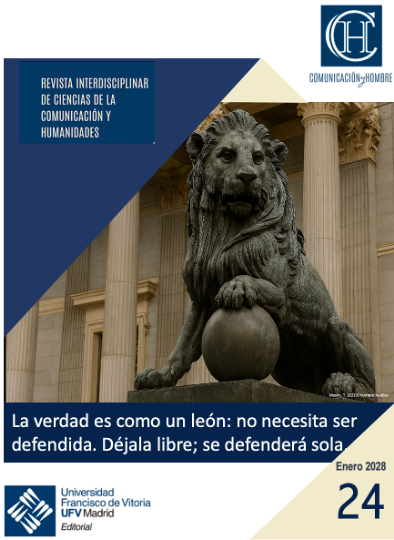
Comunicación política III.
La verdad es como un león: no necesita ser defendida. Déjala libre; se defenderá sola. (San Agustín)
CALL FOR PAPER