
Introduction
Digital Censorship: Truth and Lies in the AI Era
Comunicación y Hombre. 2026, nº22
This article analyzes digital censorship as an architecture of visibility that reorders the boundary between truth and falsehood in the age of AI, shifting ex‑ante editorial controls toward algorithmic and procedural mechanisms (data selection, ranking, labeling, shadow banning) that affect pluralism and the formation of public judgment, even within rights‑protecting frameworks such as Article 20 of the Spanish Constitution and the DSA. The objectives pursued were: (1) conceptualizing a multilayer model of digital censorship (structural, operational, and forensic); (2) assessing its epistemic effects on public veracity (accessibility, persistence, priority); (3) contrasting the role of fact‑checking agencies in the balance between civic correction and silencing; and (4) proposing an experiential educational response centered on «seeking truth» and communicating with rigor. To achieve these goals, the methodology applied consisted of an interdisciplinary critical review (philosophy, law, communication) and analysis of recent platform cases (policy changes, labeling, deprioritization) triangulated with European regulation; and a design‑based teaching intervention through the NCNM‑BV (2025) project, which implements workshops on communication auditing, evidence traceability, narrative construction, crisis simulations, and performance‑based exercises to evaluate communication competencies and ethical literacy. Among the results, the multilayer map explains how public truth weakens when it ceases to circulate: the structural layer determines what enters the system; the operational layer modulates interaction (filters, blocks, verifications); and the forensic layer rewrites or deprioritizes already‑published content. In the classroom‑laboratory, students increase their ability to detect bias and document processes (logbooks, metadata‑preserved captures, chains of custody), improving argumentative quality and resistance to manipulation. The main conclusions indicate that digital censorship operates less as prohibition and more as visibility management; sustaining a truthful ecosystem requires procedural transparency, clear limits on the intervention of verifying bodies, and an experiential pedagogy that cultivates critical perception, traceability, and professional responsibility to educate in freedom and communicate with evidence.
Studies
Censorship and Regimes of the Visible in Cinema: From Classical Film Noir to the Algorithmic Neutralization of the Gaze
Comunicación y Hombre. 2026, nº22
Deletion of posts (X), self-censorship, and image washing
Comunicación y Hombre. 2026, nº22
The Metamorphosis of Censorship in the Digital Age: Algorithmic Challenges and the Future of Journalism
Comunicación y Hombre. 2026, nº22
Caleido. The Myth of the Beautiful Tower: journey to Knowledge
Comunicación y Hombre. 2026, nº22
Analysing fake news through linguistics: Detecting manipulation tactics
Comunicación y Hombre. 2026, nº22
Research
Sound Cinema: Cinematic and Communicative Influence of the Podcast Cowboys de Medianoche During Confinement
Comunicación y Hombre. 2026, nº22
Sports centers, social networks and body cult. Analysis of the ethical perceptions of community managers
Comunicación y Hombre. 2026, nº22
Radio as a tool for media and scientific literacy: Implications for social reintegration in prison contexts
Comunicación y Hombre. 2026, nº22
Compassion in times of collapse: communication, humanity, and transcendence in Connie Willis's Doomsday Book
Comunicación y Hombre. 2026, nº22
Analysis of the levels of digital capital from the ethics of communication: proposal of an ethical-digital literacy
Comunicación y Hombre. 2026, nº22
Analysis of Employer Branding Strategies on Social Media: A Case Study of Educational Centers
Comunicación y Hombre. 2026, nº22
From Discourse on X to Urban Protest: Emotions, Polarization, and Public Space In Torre Pacheco
Comunicación y Hombre. 2026, nº22
Colabora en los próximos números de Comunicación y Hombre
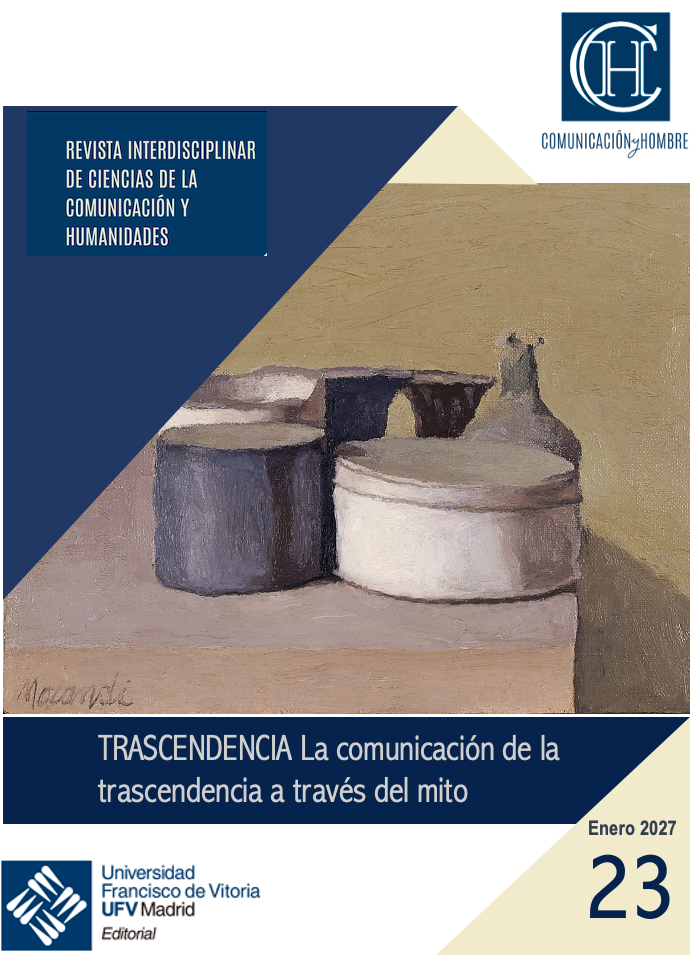
La comunicacion de la trascendencia a través del mito
CALL FOR PAPERS
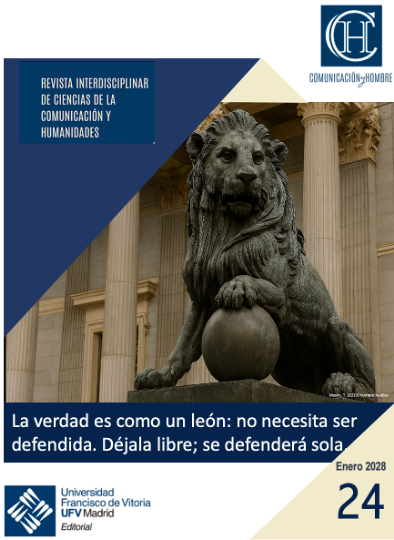
Comunicación política III.
La verdad es como un león: no necesita ser defendida. Déjala libre; se defenderá sola. (San Agustín)
CALL FOR PAPER